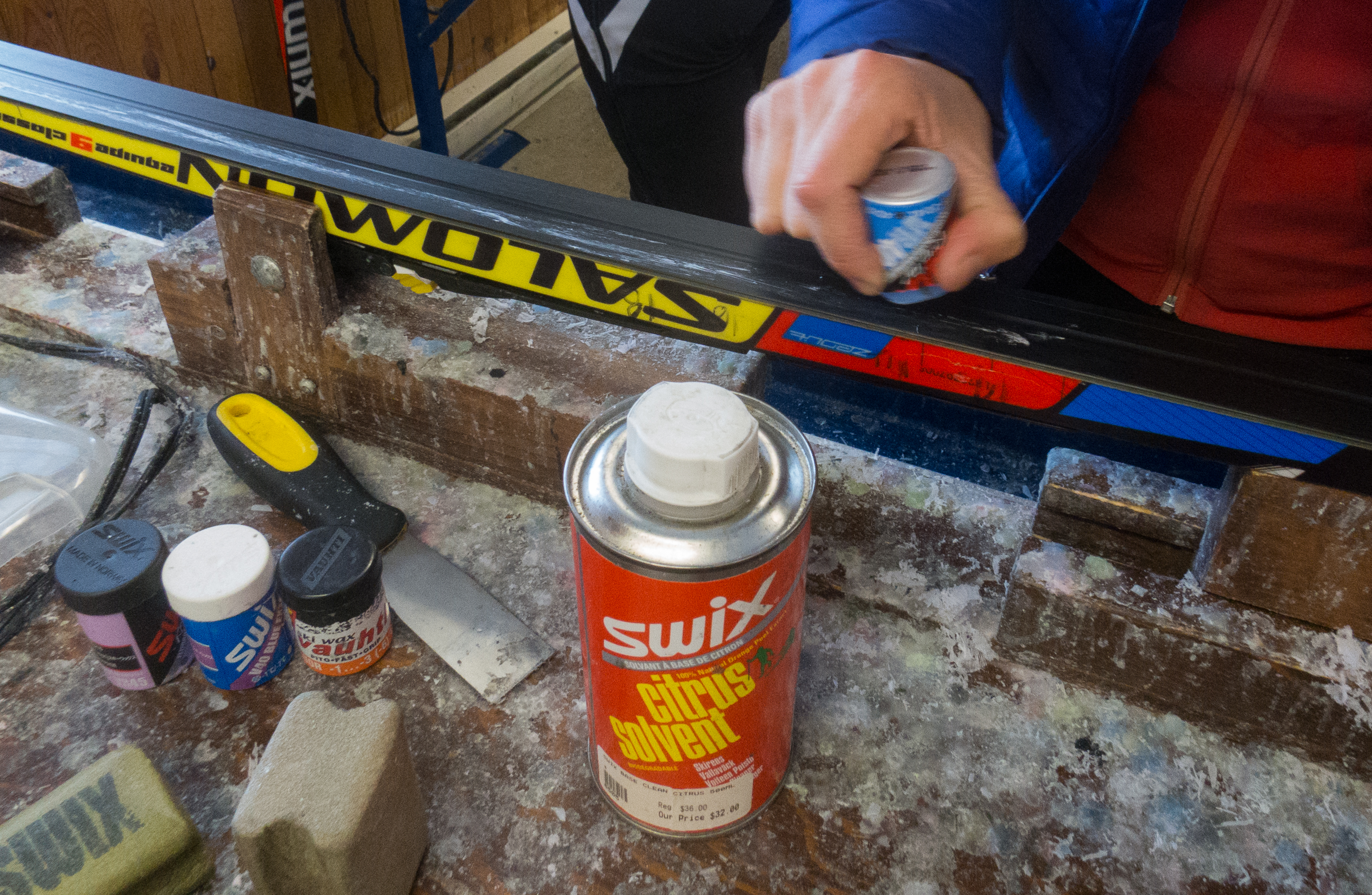
The difference between grip wax and glide wax
Glide wax is applied to the entire base of both classic and skate skis. Its purpose is to reduce friction as the ski glides forward. Glide wax is temperature-specific — cold-condition waxes are harder, warm-condition waxes are softer, and using the wrong type in the wrong temperature range leaves performance significantly below what the ski is capable of.
Grip wax applies only to classic skis, in the kick zone — the middle section of the ski underfoot. When the skier pushes down, the kick zone momentarily contacts the snow and grip wax provides the friction needed to propel forward. When the ski is gliding, the kick zone should lift slightly off the snow to reduce drag. The grip wax must hold on the snow when pressure is applied but not stick when gliding — a balance achieved by matching the wax hardness to the snow crystal structure, which is directly related to air and snow temperature.
Classic ski grip wax: temperature ranges
Most major wax manufacturers — Swix, Rex, Rode, Start, and Toko — produce color-coded grip wax lines. The exact temperature ranges vary slightly by brand, but the general structure is consistent:
| Snow temperature | Typical wax type | Wax hardness | Notes |
|---|---|---|---|
| −15°C and colder | Green / Special Green | Hard | Old, dry, sharp snow crystals; Kananaskis and Laurentians in deep winter |
| −8°C to −15°C | Blue Extra / Blue | Hard-medium | Standard Alberta January conditions; most reliable range for cold-weather touring |
| −3°C to −8°C | Violet | Medium | Common Gatineau Park and Quebec range in mid-winter |
| 0°C to −3°C | Red | Soft | Near-freezing conditions; transitional March snow |
| 0°C and above | Yellow / Klister | Very soft / paste | Wet snow; spring conditions; klister required for icy or re-frozen surfaces |
Temperature readings used for grip wax selection should be taken at snow level, not air temperature at chest height. A 2–3°C difference between air and snow temperature is common, and the choice of a harder versus softer wax can hinge on that difference.
Klister: when and how to use it
Klister is a paste-form grip wax used when snow crystals are rounded or icy — conditions that occur during and after thaw-freeze cycles, and on wet spring snow above 0°C. Klister is notoriously sticky to apply and remove, and a small amount goes further than most beginners expect. Application method:
- Warm the kick zone with a heat gun or by briefly holding the ski near a heat source
- Apply a thin bead of klister down each edge of the kick zone
- Smooth with a gloved finger or cork
- Allow to cool for at least 5 minutes before skiing
Klister remover (liquid solvent) is necessary for cleanup — regular citrus-based ski base cleaner is less effective on klister residue.
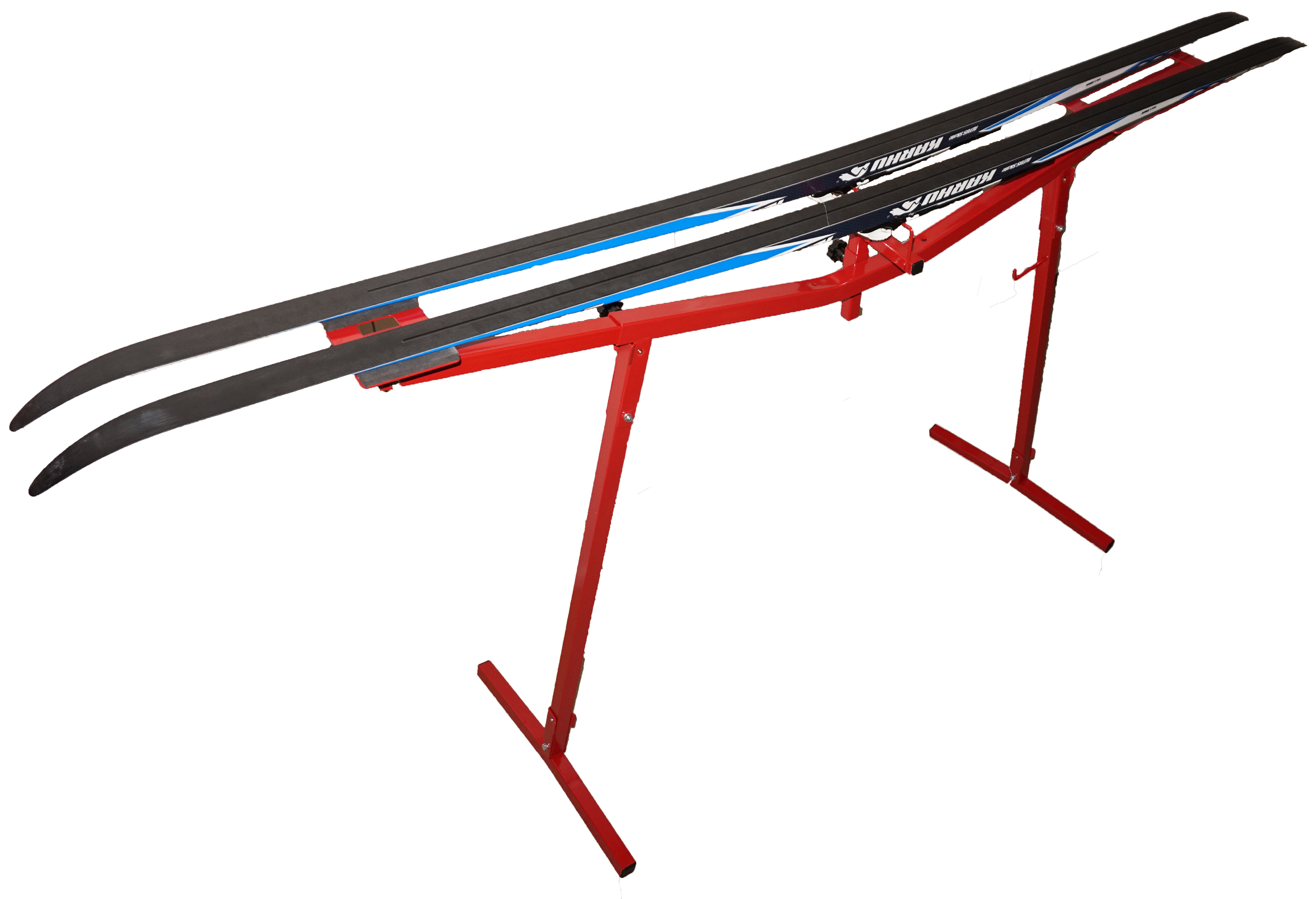
A waxing bench with tools. A firm, flat work surface improves grip wax application consistency. Image: Wikimedia Commons.
Waxless classic skis: when they make sense
Waxless classic skis use a fish-scale or step-cut texture in the kick zone instead of grip wax. They require no wax preparation for grip and work across a wider temperature range than any single wax, but they produce more drag than a well-waxed ski under ideal conditions. For recreational skiers who ski occasionally and want a low-maintenance setup — particularly across Ontario's variable temperatures — waxless skis are a practical choice. For skiers who are wax-savvy, on groomed tracks, and skiing frequently, waxable skis generally provide better performance at the cost of more preparation time.
Glide wax application (classic and skate)
Glide wax application requires an iron. The process for both ski types:
- Clean the base with base cleaner and a cloth, removing old wax and dirt
- Select glide wax by temperature range (check the packaging)
- Set the iron to the temperature specified for the wax — most fluorocarbon-free recreational waxes use 110–130°C
- Drip wax onto the base by touching the iron briefly to the wax block over the ski
- Iron the wax in, moving continuously to avoid overheating
- Allow to cool for at least 20 minutes at room temperature
- Scrape with a plastic scraper at a low angle until excess wax is removed
- Brush with a stiff nylon brush, then a soft finishing brush, working tip to tail
Minimum wax kit for a Canadian ski season
- Green / Blue Extra grip wax (cold days)
- Violet grip wax (transitional)
- Red grip wax (near-freezing)
- Universal klister (spring / re-freeze)
- Two glide waxes: cold (−10°C and below) and warm (−5°C and above)
- Wax iron
- Plastic scraper and brushes (nylon + finishing)
- Cork for smoothing grip wax
- Klister remover
Skate skiing: glide wax is the only variable
Skate skis have no kick zone and require only glide wax. The selection principles are the same as for classic ski bases: hard cold waxes for colder temperatures, softer waxes for warmer conditions. Skate skis are typically shorter and stiffer than classic skis and require the base to be fully flat when loaded — any convex camber will reduce glide. Base structure (the fine texture applied to the ski base) affects how the wax performs and is typically maintained by a shop rather than at home.
Temperature variation and wax strategy across Canada
Eastern Canada presents more temperature variability within a single day than Alberta's drier, colder interior. At Gatineau Park and in the Laurentians, mornings in February may start at −10°C and warm to 0°C by early afternoon. A common approach is to start the day with a harder wax (blue or violet) and carry a small amount of softer wax to add a thin layer over top if grip deteriorates as temperatures rise.
In Kananaskis and around Banff, temperatures stay consistently cold through January and most of February. Blue Extra or even Green is appropriate for extended periods, and the dry snow means conditions stay predictable within a day. March in the mountains brings more variation as daytime highs push above freezing, requiring more careful wax selection or a switch to klister.
Wax manufacturer websites including Swix and Rex provide temperature charts and condition guidance updated through the season.
Last updated: May 25, 2026